
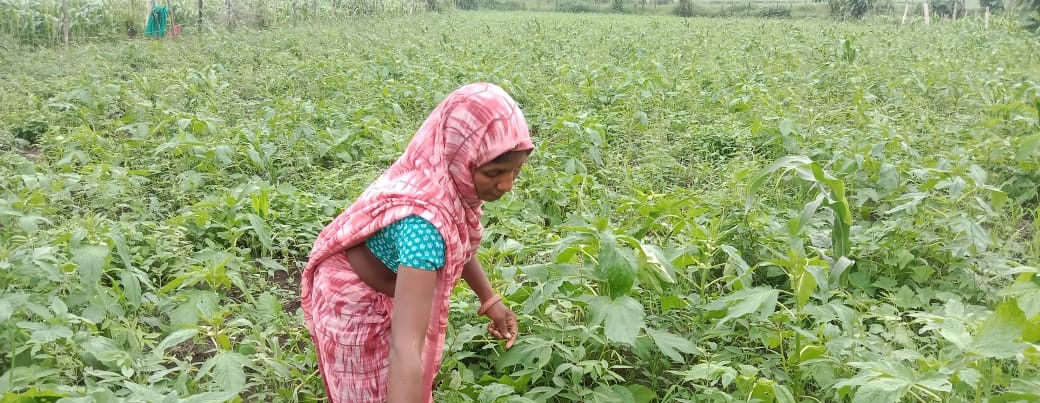
Promoting Nature-Positive Farming Systems
ABOUT US
We are a Section-8 non-profit support organisation promoting Nature-Positive Farming and Food Systems (N+FFS) at scale across India. We believe that to meet the formidable challenge of producing adequate quantities of safe, nutritious foods sustainably and to address the pervasive agrarian crisis, environmental crisis and rising incidence of malnutrition, it is crucial to mainstream nature-positive agricultural development and food system approaches that deliver on livelihood enhancement and nutrition.
We build on the mandate of the NPM (Non-Pesticidal Management of Agriculture) Network to promote pesticide-free sustainable agriculture and food systems. We collaborate with 30 organisations comprising NGOs, FPOs and market players in Central, Southern and Eastern India.
Pesticide-free logo

Food Business Operator Certification

Catalysing PF food chains-Services offered

UPDATES
_JPG.jpg)
TRAINING ON IN-FIELD SOIL HEALTH ASSESSMENTS
N+3F offered two day training cum workshop on Soil health assessment and crop nutrient management to Field supervisors and mithans of Samaj Pragati Sahayog, Melghat, Maharashtra. This workshop helps the staff to understand the soil physical and biological properties such as soil structure, crusting, colour, residue breakdown, ponding, biopores and biological diversity of the NPM practicing farmers

WORKSHOP ON INTEGRATING AGROECOLOGY PRINCIPLES & PRACTICES WITH SAMAJ PRAGATI SAHAYOG, MP
N+3F facilitated a two-day training cum workshop with Samaj Pragati Sahayog (SPS) on "Understanding Agroecological Principles and Practices and Integrating in Agricultural Program" on 7th & 8th October, 2026 at Barwaha, MP. Twenty-two senior and junior Program Officers of SPS working in eight blocks across Dewas, Khargone & Amravati districts participated in the sessions.

TRAINING FARMERS ON IN-FIELD SOIL HEALTH ASSESSMENT (IFSHA)
N+3F conducted a one-day training on "In-field Soil Health Assessment (IFSHA)” for the resource farmers of SPS at four locations, viz; Barwaha, Bhikangaon, Udainagar and Bagli. The training focused on the importance of soil health, farmer-friendly methods to assess soil functions and indicators and management practices to ensure a favourable soil environment for plant growth.

SIGNING OF MoU WITH IISS-ICAR, N+3F & SPS
Nature-Positive Farming & Wholesome Foods Foundation (N+3F) along with Samaj Pragati Sahayog (SPS) has signed an MOU with Indian Institute of Soil Science (IISS-ICAR), Bhopal to promote sustainable agriculture and food systems for enhancing livelihood security. The specific objectives of the collaboration are:
-
To assess soil health and evolve location-specific appropriate crop nutrition management strategies
-
To organize need based capacity building programs for staff of grassroots agencies and farmers
-
To undertake field testing and FLDs
-
To undertake collaborative action research

ZPUAF CERTIFICATION TO SHPL
N+3F offered Zero Pesticide Use Agriculture and Food Certification to Safe Harvest Private Limited, a leading company marketing pesticide free foods across India.

Training on DCS to Federation members of SPS at Bagli
N+3F offered one day training on Diversified Cropping System (DCS) to federation members of SPS at Bagli location. 28 members from Dengarkheda, Sewaniya, Nayapura, Aarya, Koopgaon and Thumdi villages, 2 agriculture professional, 2 agriculture supervisor and 1 community resource person participated in the session.

DCS IN CHILLI, BHIKANGAON SPS
N+3F developed pesticide-free PoP for chilli crop and it has been adopted on trial basis by resource farmers of Bhikangaon, SPS. To understand pros & cons N+3F visited the Diversified Cropping plots of chilli.

MIS WORKSHOP WITH VASUNDHARA, ODISHA, BHUBANESHWAR
N+3F conducted two day workshop for "Revisioning the objectives, activities, performance indicators and MIS of the livelihood program" with the purpose of creating common understanding on objectives and activities of PG, PGF & SLED performance & impact parameters & growth stages of PG & PGF and MIS framework
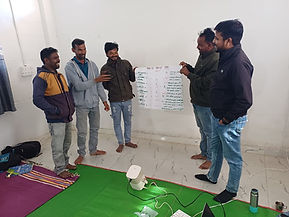
PESTICIDE-FREE CERTIFICATION TRAINING, MELGHAT, SPS
N+3F offered training on pesticide-free certification protocols, ZPUAF standards for the new mithans (CRPs) and Agriculture professionals of Melghat location of Samaj Pragati Sahayog.

DCS ADOPTION BY A FARMER
N+3F conducted DCS training to staff of CYSD. A farmer by name Mr. Purba Mali got motivated and initiated DCS on
trial basis in nearly 7 cent area. Crops cultivated under DCS includes mustard, potato, bushy bean, radish and coriander.

MANAV JEEVAN VIKAS SAMITI, KATNI, MP
N+3F visited Dheemarkheda Block of MJVS to understand the status of pesticide-free agriculture adoption. MJVS has a community seed bank (5 no.) & BRC unit (8no.). Some of the activities promoted includes kitchen gardening, back yard poultry and vermicomposting

FARMERS TRAINING ON DCS
N+3F offered one day farmer level training on Diversified Cropping system at Salai village of Melghat location. This was organised mainly to boost the confidence of farmers in adopting DCS during Kharif 2026. 34 farmers, 1 agriculture supervisor and 1 community resource person participated in the training
NEW PUBLICATIONS

Tools & methods for smallholder farmers to understand and act on soil health & crop nutrient requirements
Farmers, professionals, and development organisations working on sustainable agriculture practices of various kinds—organic farming, natural farming, non-pesticidal management of agriculture (NPM), agroecology, regenerative agriculture, etc.—adopt a holistic approach, with soil health improvement as one of the core intervention areas. While considerable attention has been given to farm management practices by these practitioners in India, less attention is given to tools and methods that can be used for assessing soil health and crop nutrient requirements. There have been many developments in Europe and North America to develop and adopt appropriate tools and methods, and there is considerable scope for learning from such initiatives. A few individual farmers and agencies in India have made some attempt to develop appropriate soil health assessment methods for sustainable agriculture, which can be explored by other farmers and promoting organisations.
Download the Book here:

Pesticide-free Agriculture and Foods Certification, a crucial step for the wider reach of safe and wholesome foods
In recent years, concerns over the use of synthetic chemical pesticides in agriculture have grown significantly, driven by mounting evidence of their adverse effects on human health and the environment. The use of hazardous chemical pesticides in agriculture was one of the pivotal elements of the Green Revolution. Pesticides are used not only in production but also in managing storage pests. In India 54,122.77 metric tonnes of pesticides were consumed during 2023-24, with Uttar Pradesh, Maharashtra, Punjab, Telangana, West Bengal and Haryana leading the usage. Although all pesticides can pose risks, the heightened concern revolves around the severe detrimental effects of highly hazardous pesticides (HHPs).